How to Organize a Home for ADHD: Room-by-Room
If keeping your home organized feels genuinely harder for you (or someone else in your home) than it seems to be for everyone else, you're not imagining it — and you're not failing.
For people with ADHD, the home organizing systems that work beautifully for neurotypical brains can feel completely impossible to maintain. Not because of laziness. Not because of a lack of trying. But because ADHD affects executive function, the brain's ability to plan, initiate tasks, and follow through on multi-step processes is impacted.
In other words, the system might not be broken. It might just be the wrong system for your brain.
Here's the good news. There are ADHD-friendly organizing systems designed around the way ADHD brains actually work — and once you find the right fit, staying organized starts to feel a whole lot less like a battle you keep losing.
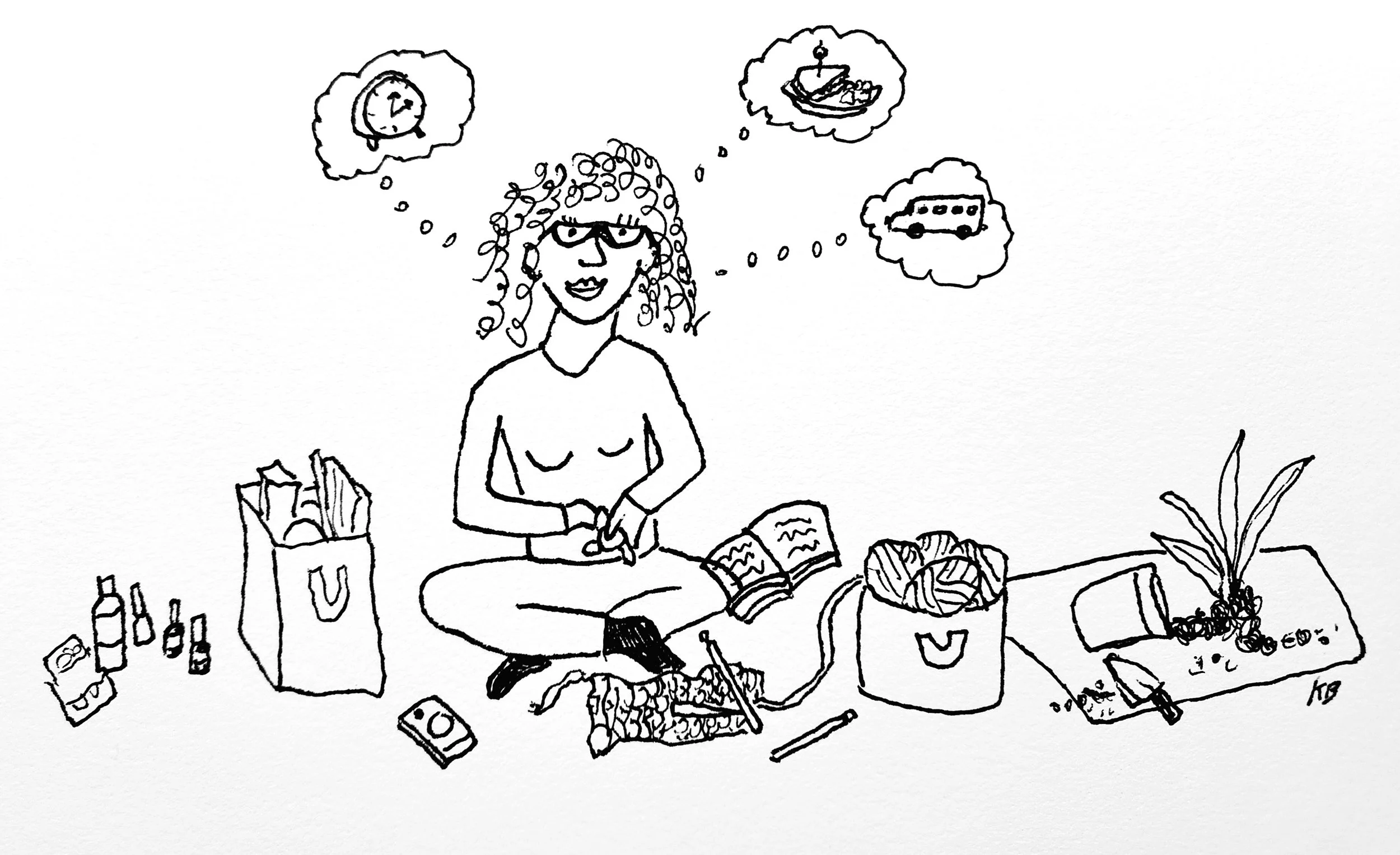
“So Many Ideas, So Little Time!!” Original Cartoon by Katrine Burkitt
The Secret to Organizing With ADHD: Reduce Friction
The #1 rule of organizing for ADHD is this: the fewer steps it takes to put something away, the more likely it is to actually get put away.
Every extra step between "I'm done with this" and "it's back where it belongs" is a friction point — a tiny moment where the system breaks down. And for an ADHD brain, even one unnecessary step is enough to derail the whole thing.
This is why traditional organizing advice ("everything has a place!") often falls short. If the place requires opening a drawer, finding the right bin, removing a lid, and closing everything back up — that's four steps too many.
ADHD-friendly systems minimize steps. They use visual cues rather than memory. And they make the easy thing and the right thing the same thing.
Let's look at [how to organize a home for someone with ADHD] by looking at how that plays out room by room.
Entryway Organizing
The entryway sets the tone for your whole house. But for ADHD brains, it also tends to be a major dumping ground because when you walk in the door, your brain is already thinking about fifty-seven other things.
It’s important to work with your brain rather than against it. Try these simple changes in the tools you use for everyday items.
Hooks: Use hooks instead of hangers whenever possible. Hanging a coat on a hook takes one second. Opening a closet, finding a hanger, and putting it back takes fifteen steps, plus good intentions. Hooks always win over good intentions.
Trays: Daily items like keys, wallet, sunglasses, ear buds, all need a place to land. Place a tray or small basket in an easy-to-access spot and use it every time to eliminate the last-minute out-the-door panic.
Baskets: Finding a shoe pile by the front door every day? Set out an open basket or bin so there’s one easy step to put shoes away. A beautiful shoe rack requires lining shoes up neatly, and though it seems like a small task, it will get ignored by any ADHD family members.
Kitchen Organizing
Kitchen organizing is tricky for anyone, but especially for ADHD-friendly organizing because there are so many categories and moving parts. Not only do you need all the categories for food prep and appliances, but it tends to be a drop zone for family papers, mail, and random LEGO pieces or a broken doodad that you’ve been meaning to superglue.
Cooking itself requires a lot of executive function between all the ingredients, equipment, and timing. When it’s time to clean up afterward, the brain is already worn out, so let’s make it as easy as possible to tidy up in the kitchen.
Here are a few common practices to help you stay organized:
Clear Containers*: When you can see what you have at a glance, you actually use it. Solid color containers create an "out of sight, out of mind" problem that leads to forgotten food, duplicate purchases, and dinner-time decision paralysis.
Counter Tray: Some things are going to live on the counter, no matter what. Instead of fighting it, designate a specific zone and contain it. A small tray or vertical file holder keeps papers from spreading and gives you a place to drop mail every day. Label it “To Sort” and keep papers contained without requiring immediate decisions. Trays also work well near the sink for soaps or scrub brushes.
Simplify Cabinets: It should be extremely easy to put away common items like dishes, pots and pans, and silverware. If it requires more than one or two steps, it’s time to simplify or things won’t get put away.
* Don’t purchase containers before you know what you need! Assess what you need to store, and then purchase new items if needed.
Living Room Organizing
The living room is the room where everything from every other room eventually ends up. Blankets, chargers, homework, snacks, that one shoe — it all drifts here, because this is where people actually live.
For ADHD brains, the living room needs to be designed for the way it's actually used, not the way it's supposed to be used:
Baskets and Trays. Sensing a theme? A large basket by the couch isn't clutter when it’s used intentionally. Drop blankets, books, and anything else into it if they legitimately live in the space. A tray on the coffee table corrals remotes, chapstick, and the other small things that always end up there anyway.
Create a Reset Bin. Keep one attractive bin or basket in the living room, designated for items that need to go elsewhere in the house. Instead of making multiple trips, everything gets dropped in the bin and sorted once — either at the end of the day or whenever feels manageable.
Charging Stations. Cords and devices pile up because people charge things where they use them. Rather than fighting it, create a small, designated charging zone right in the living room. A little tray or station makes it intentional — and suddenly the cords have a home.
Kids' Spaces and Playroom Organizing
This reminder is for all the parents of kids with ADHD: the beautiful color-coded toy storage with the matching labels and the separate bins for every tiny category? It looks incredible. It also has about a 7-minute lifespan.
Here's what actually works for organizing tips for kids with ADHD:
Big Bins: The bigger and more open the container, the lower the bar for "putting it away." A giant basket everything can be dumped into? That's a system a kid will actually use.
Picture + Word Labels. For younger kids especially, a photo or drawing of what goes inside makes the system self-explanatory. No reading required, no asking for help — just look and drop.
Fewer Categories: Resist the urge to organize toys into thirty perfectly curated categories. Three or four big buckets (building stuff, art stuff, figures/dolls, outdoor stuff) is way more sustainable.
Low and accessible storage only. If a kid has to reach, climb, or ask for help to put something away, it won't get put away. Simple as that.
Teenagers With ADHD:
Create a Homework Routine: Set your kids up for success by setting a time and place for homework. Schedules fluctuate, but if if they can expect to check in on homework daily, they’ll begin to build better habits.
Schoolwork Zone: School items should be stored simply and easily, and used every day. A shelf for books, devices, and one basket to collect papers. (Don’t toss any papers until they’re 100% not needed!)
Bedroom Organizing
The bedroom is where the day ends and where the next one begins — which makes it prime territory for ADHD friction. Clothes end up on the floor (or the "chair"— you know the one), things can't be found in the morning, and the space never quite feels restful.
A few systems that help:
Worn Once Area. Every bedroom has a chair that collects worn-but-not-dirty clothes — because they don't belong in the hamper but also don't need to be hung back up. Instead of fighting this, set a designated spot (hooks, a small rack, or an open basket) for "worn once" clothes. This removes the guilt and gives those items an actual home.
A Functional Nightstand. The nightstand should only hold what's needed at night and in the morning. Your phone charger, water, and anything else you need before bed. Clutter on the nightstand = clutter in the brain before sleep.
Tomorrow's Outfit. For adults and kids with ADHD, choosing clothes the night before removes an entire decision-making task from the most chaotic part of the day. A small hook or designated spot at the end of the bed or on the back of the door makes it easier to build this habit.
Hamper Placement. A hamper that requires walking to the closet will go unused. Put it where clothes actually get taken off — right next to where people get undressed — and suddenly laundry starts making it in.
Bathroom Organizing
Bathrooms are small, but for someone with ADHD, a cluttered bathroom counter can derail the entire morning. When it takes too long to find things, or the routine has too many steps, it doesn't get done — or it gets done halfway.
Clear containers or drawer organizers can help keep like items together (think: hair products, skincare, daily essentials). But the key is to avoid overfilling them.
If everything barely fits, it won’t stay organized.
Here are a few other tweaks that make a real difference:
Daily Items in Open View. This might feel messy, but for ADHD brains, out of sight genuinely means out of mind — and out of the routine. A small tray to corral the daily essentials keeps it looking intentional without adding steps.
Drawer Dividers. Drawers are fine for backup supplies, but they should be simple and clearly divided. Tossing everything loose into a drawer creates the "dig and give up" problem every single time.
Hooks for Towels. This is the bathroom version of hooks over hangers. Hanging a towel on a hook takes one motion. Folding and draping it over a towel bar takes five. Hooks always win.
The DOOM Pile Room
DOOM = Didn’t Organize, Only Moved.
These are the piles that accumulate over time to “deal with later” and they tend to collect in spaces that are out of sight and not used often. You know the ones...guest rooms, home offices, closets, or the basement corner that quietly collects a very random pile of piles.
DOOM piles usually grow because items that don’t have a home. Then they collect in a room or space that becomes the default holding zone for everything without a clear destination.
The key to tackling these piles isn't a marathon organizing session (which is exhausting and hard to sustain for ADHD brains). It's building better systems in the rooms where things should live first, so items have somewhere to actually go.
Once the rest of the house has real homes for things, the pile stops growing — and clearing it out becomes much more manageable.
The Bigger Picture: Systems Over Willpower
Here's the most important thing to know about organizing a home for someone with ADHD — it's not about trying harder. It's about designing smarter.
When simple systems are in place — a hook for keys, open storage, visual cues, minimal steps, and a layout that works with how the brain naturally operates — staying organized stops feeling like a constant uphill battle.
Setting up those systems is exactly what we do as professional organizers. We don’t just tidy up, we design systems that actually work for the specific person using them. An ADHD-friendly home doesn’t look a certain way; it functions in ways that make daily life easier.
Ready to stop fighting your space and start working with it? I'd love to help. Contact me to learn more about how we can build a system that actually fits your life.
Your Favorite Organizer,
Katrine
Additional Resources for ADHD Education
CHADD (Children and Adults with ADHD)
Resources for your reference that helped with this blog post:
ADDitude Magazine
https://www.additudemag.com/helping-adhd-students-get-organized-for-school/
ADHD & Homeowork: How to Stay Organized https://drjenniferdilts.com/blog-3-1/adhd-homework-how-to-stay-organized
The Orderly Space Blog
https://www.theorderlyspace.com/blog-archive/adhd-friendly-organizing-systems
Life Simplifed Blog https://lifesimplifiedblog.com/the-ultimate-guide-to-adhd-friendly-home-organization-systems-that-actually-work/NeuroLaunchhttps://neurolaunch.com/adhd-decluttering-checklist/
DOOM Piles https://www.goodhousekeeping.com/home/organizing/a71163617/doom-piles-organizing-tips/