Organizing Tips for Busy Moms: Simple Systems That Make Life Easier
Let’s face it — staying organized as a mom can feel like brushing your teeth while eating Oreos. They say moms have eyes in the back of their heads, but maybe it’s just that you’re too afraid to turn your back!
You tidy one room… and someone’s already turned the other into a blanket fort, a snack station, or a “very important project” involving scissors and tape.
And while the internet might suggest color-coded bins and perfectly labeled drawers, you’re over here just trying to find matching socks and drink your coffee while it’s still warm.
So instead of chasing perfection, let’s aim for something attainable and create systems that actually work in real life — with kids, schedules, and all.
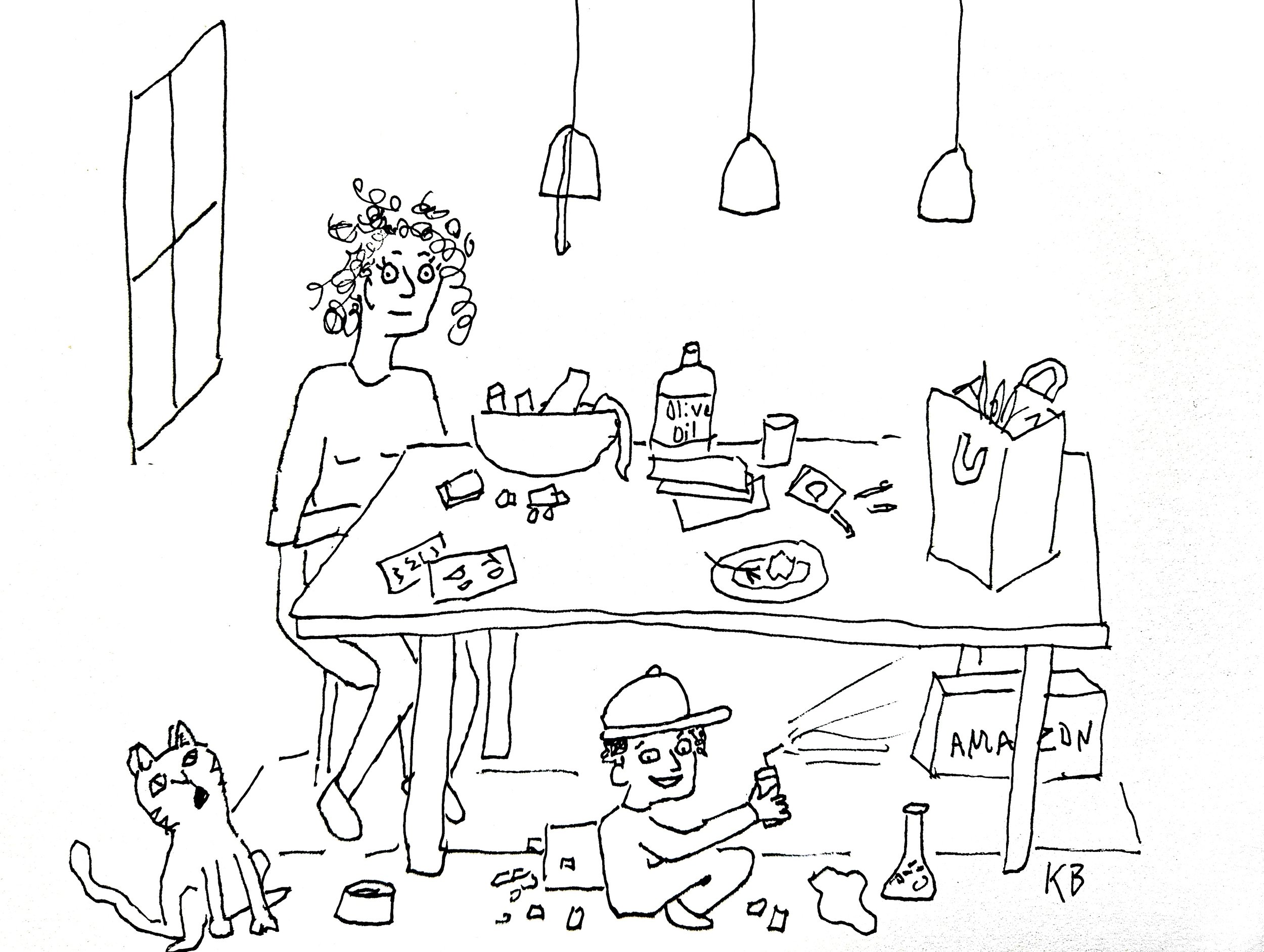
Original cartoon by Katrine Burkitt, inspired by many years of nannying!
Organized Doesn’t Mean Perfect
If your home feels a little chaotic sometimes, you’re not failing—you’re living life right in the thick of it.
Organization isn’t about creating a space that looks untouched. It’s about creating a space that supports you on a regular Tuesday morning when everyone’s running late and asking you where their shoes are (the ones they were just wearing 5 seconds ago).
We’re trying to reframe things and think less “Pinterest perfect pantry” and more “we can find what we need without a frantic search.”
When you shift your definition of organized fromperfect to functional, everything starts to feel more doable—and a lot less heavy.
Simplify Your Systems
When organizing systems fail, it’s often because they’re overcomplicated and ask too much of you.
If something takes multiple steps to put away, it quickly turns into a pile instead.
That’s why simpler is always better:
Open bins instead of lids for commonly used items (because no one wants to fight a container at the end of a long day)
Broad categories instead of hyper-specific ones
Keeping things where you naturally use them—not where they “should” live
A good system doesn’t just look nice—it works when you’re tired, distracted, or holding three things at once (including a child).
If it feels easy to use, it’ll get used. And that’s what matters.
Start With the “Hot Spots” That Impact Your Day
You don’t need to organize your entire house to feel more in control.
In fact, trying to do that is usually what leads to overwhelm in the first place!
Instead, hone in on the areas that create the most daily friction:
The kitchen counter that collects everything
The entryway where shoes, bags, and jackets pile up
The paper zone (aka: school forms, mail, mystery flyers, receipts)
When you spend even 10–15 minutes resetting just one of these spaces, you create a ripple effect. Suddenly, mornings feel smoother. Evenings feel calmer. You’re not constantly reacting to clutter.
When you’re short on time (and sanity), it’s not about doing everything. It’s about doing the right things.
Include Your Kids in Organizing
This is the part that can feel a little uncomfortable at first.
It’s faster to do it yourself, but involving your kids isn’t about speed. It’s about building skills they’ll carry with them for life.
And though it’s slower at the beginning, it’s faster in the long run because they’ll know how to clean up after themselves before they’re in college!
Start simple:
Give items clear, easy-to-understand homes
Use labels (words or pictures) that they can actually follow
Keep things at their level so they can access them independently
And most importantly, let go of perfection.
They might shove things in bins.
They might forget sometimes.
They might do it differently than you would.
That’s okay.
Because what they’re learning is so much bigger than a tidy room.
They’re learning how to take care of their space, how to reset after a mess, and how to contribute to the home they live in.
And if no one ever taught you these skills growing up, this is where things get really meaningful.
You’re not just organizing your home—you’re giving your kids something you may have had to figure out the hard way.
Try Small Resets Throughout the Day
The idea of a full “organizing day” sounds great in theory, but in reality, it rarely happens the way we imagine.
Life is full. Kids are unpredictable. Energy comes and goes.
So instead of waiting for a big reset, weave small ones into your existing routines:
A quick kitchen reset while dinner is cooking
A 5-minute tidy before bedtime
A simple Sunday check-in to get ready for the week
These moments don’t take long, but they keep things from reaching that overwhelming, where-do-I-even-start stage.
And maybe more importantly, they help you feel like you’re staying on top of things—without needing hours of time you don’t have.
Realistic Expectations
This is the quiet secret behind every system that actually works.
The goal isn’t to create something that only looks good on day one. It’s to create something that still works on day ten… and day fifty.
A helpful question to ask yourself:
Would this system still work on a busy, chaotic day?
Could my kids realistically follow this?
Does this feel supportive—or like one more thing to manage?
When your systems are flexible, forgiving, and easy to use, they become part of your life instead of something you constantly have to “get back to.”
Quick 5-Minute Wins (Because That’s All You Have Time For Right Now!)
Sometimes, you don’t have the bandwidth to create systems, try small resets, teach your kids how to tidy, or create a plan.
Sometimes, you just need to take action and do something!
If a full organizing project feels like too much, start here. These tiny tweaks can make your home feel calmer almost instantly—no projects required.
Add a Hook For Your Keys (and actually use it)
One small hook by the door = no more frantic “has anyone seen my keys?!” mornings.Place a Catch-All Basket Where Clutter Naturally Lands
Sunglasses, mail, random tiny things—they need a home. A simple basket turns a pile into something contained (and way less stressful to look at).Use Trays to Group Everyday Items
On your counter, coffee station, or bathroom—trays make things look intentional, even if they’re not perfectly styled.Create a “Drop Zone” for Bags and Backpacks
A bin, a hook, or even a designated corner helps keep the daily shuffle from taking over your entire house.Do a 10-item Declutter Sweep
Set a timer or just challenge yourself to find 10 things to toss, donate, or relocate. It’s quick, satisfying, and surprisingly impactful.Corral Paper Before it Takes Over
A simple upright file, folder, wall-pocket, or bin for incoming papers keeps them from spreading across every surface.Put a Small Bin in Each Room for Quick Resets
When you don’t know where something goes, toss it in the bin. Later, you can sort it all at once (instead of stopping your whole day).Move One Thing Closer to Where You Actually Use It
One small shift (scissors in the kitchen, wipes in the back entryway, shoe basket by the door) can save you time and mental energy every single day.Keep a Donation Bag Somewhere Accessible
When you find something you no longer need, you’ll have a place to put it immediately (instead of second-guessing it later).
Real Life Happens
There will still be messes.
There will still be days when everything feels a little louder, fuller, and more chaotic than you’d like.
That’s not a sign that your systems aren’t working. That’s a sign that real life is happening inside your home!
But when you have even a few simple systems in place—ones that work for you and not against you—everything starts to feel a little lighter.
You spend less time searching, less time resetting, and less time feeling behind.
And over time, something even more meaningful starts to happen:
Your kids begin to understand that taking care of a home isn’t about perfection or pressure. It’s just part of everyday life.
They grow up knowing where things go. They learn how to reset a space. They see that messes aren’t failures—they’re just something you handle and move on from.
And that kind of confidence? It lasts a lot longer than a perfectly organized, color-coded drawer.
Need a little help getting started?
If you’re feeling overwhelmed or unsure where to begin, you don’t have to figure it all out on your own.
I can help you create simple, realistic systems that work for your home, your routines, and your family—no perfection required. Contact me to see how easy it is to get started.
Happy Organizing,
Katrine